Foundation installation in Sierra Madre CA - a foundation built for your lot
Planning an addition or a new house and not sure what your soil and the city will ask for? We plan the foundation around both.
What does it take to put in a new foundation in Sierra Madre?
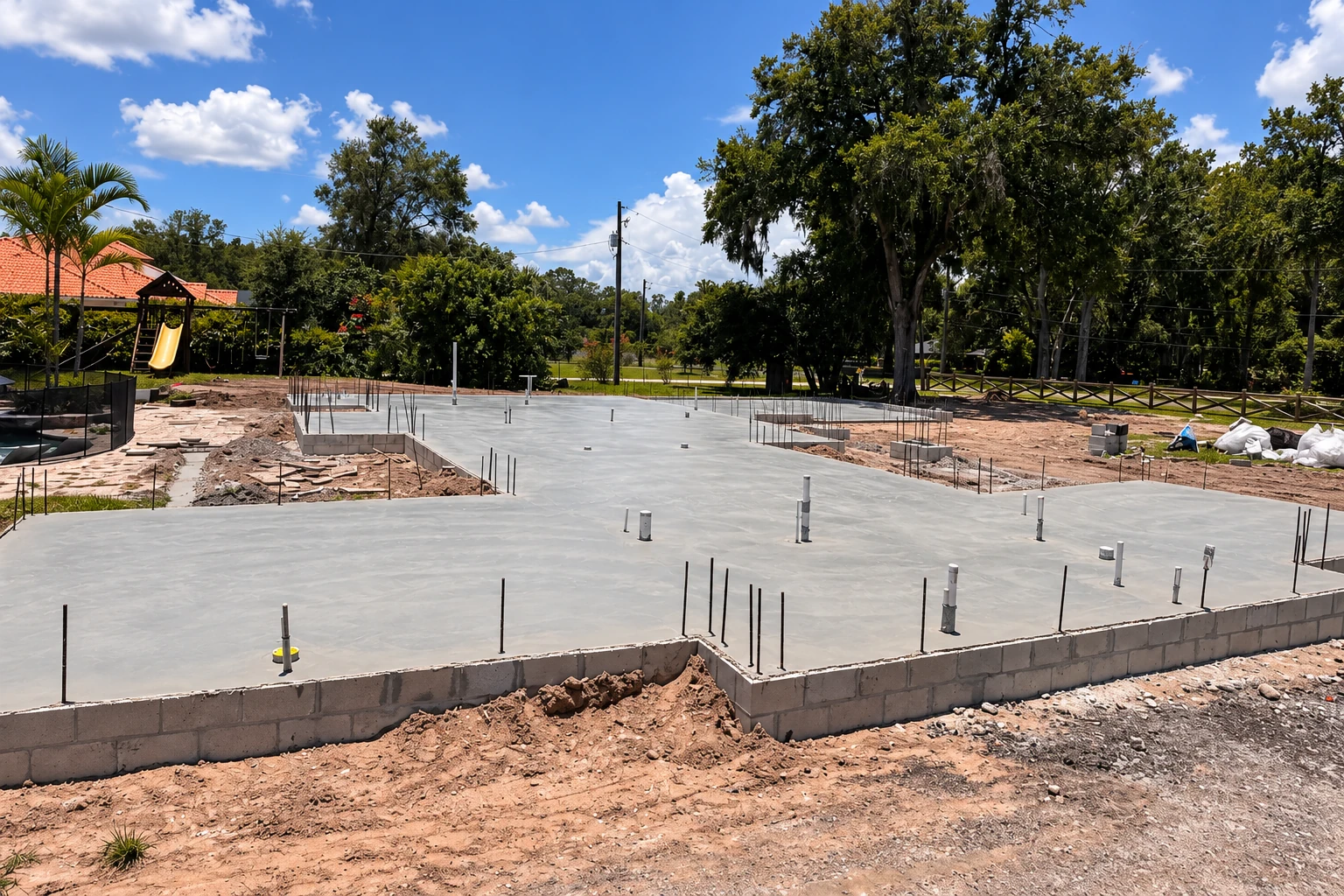
Foundation installation in Sierra Madre means digging, forming and pouring the concrete that carries your house or addition, sized to the soil under your lot and the weight of what sits on it. Most of the calendar goes to planning and city review, not to the pour itself.
Most people who call me about a foundation are planning an addition, a new house or a backyard unit, and they want to know what they're getting into before anything gets dug. The price moves with the size of the footprint, how deep the footings need to go for your soil, how much steel the design calls for and how easy the lot is to dig and reach. The schedule turns mostly on the city's plan review and on whether your lot sits in a state-mapped hazard zone, because that adds study before anyone pours. I'll walk the lot with you and give you your own figure at the estimate. Does that make sense as a starting point?
How we handle foundation installation
A foundation starts with the soil and the weight of the building, so the first thing I ask about is your lot and any plans or soil reports you already have. I'll also ask you to look up your address on the state's earthquake hazard map, and we build the city's plan review into the schedule from day one instead of finding out about it late. Once the plans are approved, our crew digs out to the depth the design calls for and packs the subgrade, the soil the concrete sits on, because a foundation on loose dirt settles right along with that dirt. We check where water runs off the lot so it doesn't collect at the foundation, then set the forms and the rebar, the steel bars that hold the concrete together when the ground pushes or pulls on it. We pour early in the day so the heat doesn't leave a weak top, and then the concrete cures, which is the wait while it gains strength before anything gets built on it. Nearly all of this ends up buried, so if the budget gets tight, the base is the last place I'd cut, because nobody can fix it once the walls are up.
Plenty of foundation jobs come with work on either side of them. If your plans call for support under a garden wall, a porch or a post, we pour concrete footings dug down to firm ground. When the project is a small commercial building or a property that needs paved parking, we can follow the foundation with concrete parking lot building, which comes down to the same packed base and drainage, only spread wider.
Why Sierra Madre homeowners call Cornerstone Sierra Madre Concrete for foundations
I write your estimate myself
I come out myself to look at the lot and write the estimate, and our crew does the work with me on site running it. The person who heard your questions is the same one checking the forms and the steel before the pour.
In business since 2020
I started this business in 2020 after years on concrete crews around the San Gabriel Valley, and before that I mixed concrete for barn floors and trough pads on the farm I grew up on. A barn floor teaches you early that what's under the concrete decides how long it lasts.
Licensed and insured for this work
We're fully licensed and insured. Ask to see both before you hire anyone for a foundation, us included.
Scheduled around Sierra Madre's rules
Every project here starts with a check against the city's planning and zoning rules, and some also need a Design Review or Hillside Development Permit, so we find out early which ones apply to yours. We plan pour days inside the city's construction hours, 7 a.m. to 7 p.m. Monday through Saturday and 10 a.m. to 6 p.m. on Sundays and holidays, which matters when a foundation pour runs long.
We're based in Sierra Madre and work in Pasadena, Arcadia, Monrovia and many other cities around them. Call (626) 828-0332, email quotes@sierramadreconcrete.com or send us a request, and have your address, your hazard map result and any plans or soil reports handy so the first visit gets somewhere.
Get a foundation estimate for your lot
We get back to you within one business day to set a time, and the estimate is free, done on site and comes with no obligation. I come out myself to look at the lot, go over any plans you have and write up the estimate.
Foundations from forms to pour
What to ask before a foundation goes in
How much does a slab foundation cost in the Los Angeles area?
An installed slab foundation in the Los Angeles area usually costs about $5 to $13 per square foot. That's what the work tends to run around here, not our price, and your own number comes from the estimate once I've seen the lot and any plans you have.
How long does city plan review take before a foundation can start in Sierra Madre?
The city says the first plan check may take 6 to 8 weeks, and plans often need more rounds before the building permit is issued. Your plans go to the city's planning, public works, structural, fire and building reviewers, so count that time in before you settle on a start date.
Does my lot in Sierra Madre need a soils study before a foundation goes in?
If your lot sits in a state-mapped liquefaction zone, the stability of the foundation soil has to be investigated, and in a mapped landslide zone the stability of the hillside has to be evaluated. For a house people live in, the design and construction then need measures to deal with it, which adds steps before we pour. The state's hazard map I mentioned above shows whether your address is in one of those zones, or whether your area hasn't been evaluated yet.
Who can pull a building permit for foundation work in Sierra Madre?
Sierra Madre issues Building and Safety permits only to a State of California licensed contractor or to the property owner. The city requires permits for projects that alter a structure, and since its list of examples doesn't name foundations, ask the city's Building and Safety Division rather than assume. Before work starts we look into what your job needs, and when a permit applies, we handle the application as the licensed contractor and walk you through each step.
What causes a foundation to move after it's built?
On clay soils that swell and shrink, landscaping, utility lines under the slab and drainage are perhaps the biggest causes of foundation movement. That research comes from outside California, and it found these problems often show up after a building has been in use for some time, so how you water and drain the yard keeps mattering for years.
How do I choose the right type of foundation for my house?
The right foundation comes down to the load the building puts on it, the soil under it and the cost. A slab foundation, deeper footings or a mix of the two can each be right on a different lot, so we start from your plans and what you know about the ground before we talk about type.
Other concrete work that goes with a foundation
- Concrete footings
When a deck, a carport or a block wall needs something solid under it, footings dug to firm ground carry that load down to soil that holds it.
- Concrete parking lot building
If your property serves customers or tenants, a concrete parking lot built on a thick, packed base handles cars and trucks every day and sheds water away from the building.